Wednesday, 23 December 2015

Woman in Black Audiences & Institutions

The Woman in Black Audiences & Institutions
1. Who do you think the primary and secondary target audience is for The Woman in Black? Why?
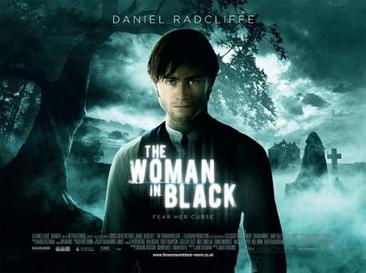
The primary audience is the main target audience the film is aimed at. In The Woman in Black's case the primary target audience is horror fans, this film is a gothic horror and this is exhibited through the location, the themes and the lighting of the film. Further evidence of The Woman in Black being a horror movie is through advertising, the dark colour schemes and tagline "FEAR HER CURSE" push that this film is a horror.

The secondary target audience is a more casual audience that the filmmakers are trying to attract. In the case of The Woman in Black the secondary target audience is Harry Potter fans, due to Daniel Radcliffe's lead role in the franchise. Harry Potter fans will feel an emotional connection with Daniel Radcliffe having grown up with Harry Potter films in the same way he grew up in Harry Potter films and will want to continue supporting him in whatever he does post-Harry Potter.

2. How was The Woman In Black marketed?
The main tool used to market The Woman In Black was social media. The film's primary target audience are horror fans and young adults, so using social media platforms such as YouTube, Twitter and Facebook made sense - the audience use these platforms on a daily basis and exposure to advertisement of the film was inevitable. Also used was TV channels such as E4, MTV an T4. 

Daniel Radcliffe also played a big part in marketing the film through public appearances, TV interviews and magazine interviews to embrace the fact that he is still in the film industry and his films must be seen. Due to the film's high budget (roughly $17,000,000) the marketing campaign was able to be distributed everywhere, on buses, billboards, adverts, online websites, posters around cities, and this was all alongside the teaser trailers that were released.

3. Do you think the marketing materials for the film were appropriate? Why?
The marketing materials covered every possible ground they could, the depth of marketing that went into The Woman In Black would be the best way to promote a film that filmmakers want to be a success. In today's society the internet is massive, it is a modern way to advertise, it is quick and effective - it is accessible globally and is online for everyone to see. 
The use of newspaper advertisement and the re-release of the novel along with advertising it through the theater version would attract an older, more intelligent audience who would respect the derelict idea and outline to the film.
Daniel Radcliffe's work promoting the film helped attract the primary and secondary target audience as it was his first film since the Harry Potter series and viewers would've been thriving to see him back on their screens. The amount of marketing for the film was appropriate because it ensured that every person in the average community would've heard of The Woman In Black.

4. What kind of release did the film have?
The release of the film matched the standards of the marketing and advertising campaign. The film was released across 39 countries and reached 3000 screens worldwide, both the primary and secondary target audience was reached.Worldwide The Woman In Black grossed $127,730,736 - this made the film the highest grossing British film within the last 20 years.

5. How much did The Woman In Black cost to make? What was the industry impact?
The box office trends states that The Woman In Black cost $35,000,000 to make. This is including the advertising campaign costs, the use of this campaign however definitely brought in the success for the film. The first week after its release at the box office it was halfway to breaking even, making it a given that the film would be a success after another week. The film also aided the revival of Hammer Film Productions studio and was the most successful British film within the last two decades. The worldwide gross success of the film grew to $128,956,260 proving the film to be a massive success as it exceeded its production budget by almost $100,000,000.

6. Why do you think the film was so successful?
Personally I think that the film was so successful due to its massive marketing and advertising campaign and the film's star power. The marketing and advertising campaign reached just about everywhere, ranging from online, to TV adverts, billboards and posters, newspapers to buses. Daniel Radcliffe was crucial to the film's success, his part in promoting the film through TV appearances and magazine interviews because of his stature in the film industry, this was his first film since the Harry Potter series and fans were very excited to see him in a new role.

Monday, 14 December 2015

Location report


Target audience and Influences moodboards

Mood and Influences Board 
Our main target audience is between the ages ages 15-24, they would enjoy typical paranormal horror films, with conventional endings and events, such as stereotypical characters and locations. This would bring in the majority of viewers of horror fans, as they have molded and grown to the horror as it's developed into new things. The paranormal fan base is continuously growing ever since the first paranormal activity was released in 2009 giving us a wide range to encourage to watch our film trailer. Companies like Facebook and twitter would be an ideal way to advertise and influence people to watch our trailer, as the majority of the generation use social media, and it's one of the biggest revenue streams for advertising and promoting. Which will definitely help us grab our target audience.


 Our influences have came from many other horror films, such as the Blair Witch Project, which uses hand held camera throughout the entire film, which we intend to do throughout our film, but not primarily using a hand held cam. We also used influence and shot types from films either in a similar location, like John Carpenters The Ward, as it takes place in a mental institute, or films with similar paranormal narratives, like the conjuring and paranormal activity.

Record Sheets

Monday, 23 November 2015

Narratives theory and Halloween

Analysis of Halloween


Halloween is an American horror thriller movie directed by John Carpenter in 1978. The film is set in Haddonfield, New Jersey and centres around psychopathic killer and mental hospital escapee Michael Myers, murderer of his older sister when he was 6 years old, returning home 15 years later to kill.
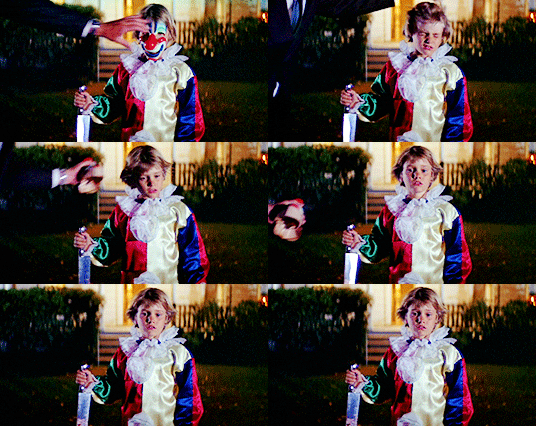
The film opens with Michael Myers as a child killing his sister, which is followed by a shot where Michael’s parents take his mask off in the street and the camera cranes upwards until it fades, and then we come back in 15 years have gone. We don’t question it we just accept it, Bordwell and Thompson’s theory of narrative expands on Todorov’s classical Hollywood narrative and talks about time and space, however when we rejoin the story 15 years later from then on it tends to follow the classical Hollywood narrative.
Michael stabbing his sister disrupts normality at the start of the film

There is relative equilibrium at the beginning from where the film picks up from. The scene after Myers kills his sister is followed by a shot of a doctor and nurse driving to the hospital, nothing out of the ordinary is happening and there is no reason to suspect any unsettlement or disruption. The event and recognition go hand in hand, the event is Michael Myers escaping on the night before Halloween 15 years after murdering his sister, the recognition is Dr. Loomis realising Michael has escaped and happens straight after the event. Myers has escaped the night before Halloween on purpose so that he gets back into town on Halloween night, the doctor knows this; it isn’t an accident. This results in the resolution being followed from the doctor’s perspective. Dr. Loomis returns to the old abandoned Myers family house waiting for Michael to come back, conventional of horror movies, there is no real resolution, the doctor shoots Michael 6 times, once in the head and another 5 times in the chest and he falls off the second floor patio, we assume Michael is dead but in the final shot of the film his body is nowhere to be found, and the film fades out with heavy breathing, reinforcing that he is in fact still alive, giving the film no closure and leaving it open to sequels.

Shot of Michael after Dr. Loomis shoots him
Next outside shot Michael's body is gone and the soundtrack restarts

When you look at character types in relation to Propp’s theory in relation to characters that keep reappearing in narratives, there are at least four in Halloween. Michael Myers is the villain of the film and this is obvious, we know this from the start of the movie, he kills his sister and escapes from a mental hospital. There Is no real hero in Halloween, however, in a way the doctor is the hero of the film; he is not the archetypal good looking hero but he is the protagonist who goes after Michael when he returns to the town. The victim of the film is Lauri as she spends the majority of the film being followed by Michael, who is trying to kill her all the while although there are other female victims such as Annie who Michael actually kills. The police officer is the helper, he listens to and helps the doctor when he is waiting outside of the Myers house. The film also uses Carol Clover’s final girl theory. The main character Laurie is middle class, well educated, doesn’t go out, doesn’t have sex and doesn’t drink or do drugs (other than smoking the joint in the car with Annie), all typical traits of the final girl.

Laurie defending herself against Michael

There are many examples of binary opposition throughout the film, conventional of most horror films good vs. evil is the most obvious one in Halloween, with Laurie being the good hero and Michael being the bad villain. Another is past and present, the film begins with Michael killing his sister and then shifts back to present day, 15 years on. Purity and promiscuity; Laurie is the “square” of her friends, whilst her friends are interested in boys and parties, she is more interested in her studies and thinks that boys are intimidated by her intelligence. Natural and supernatural; Michael survives getting shot 6 times and falling off a balcony, suggesting there is something supernatural, potentially even non-human about him. As well as being contrasted with Laurie in terms of good and evil, Michael is also contrasted with Dr. Loomis and the sheriff, they are the authority and he is the danger that they are trying to stop.
Dr. Loomis spends the film trying to stop Myers


Halloween both complies with and challenges narrative theories. The film doesn’t follow the Classical Hollywood Narrative, but not many horrors do. However, the character has clear character types, binary oppositions and follows the final girl theory. 

Monday, 16 November 2015

Narrative Structures and The Crazies

 Analysis of The Crazies (2010)


The Crazies is an American thriller horror movie directed by Breck Eisner in 2010, and is a remake of the original classic horror of the same name (released in 1973) by renowned horror filmmaker George A. Romero, most notably known for his series of zombie films such as independent film Night of the Living Dead (1968). The Crazies is a film that follows the residents of a small town in Iowa suddenly plagued by insanity and then death after a mysterious toxin contaminates their water supply.


The opening scene of the movie
Bulgarian structural linguist Tzvetan Todorov believed that all stories followed the same structure, which he broke down into 5 stages, the “Classical Hollywood Narrative”. The first stage is equilibrium, the diegesis is set out, everything is normal and usually the beginning is a calm period, status quo. Then an event occurs; agents of disruption cause disequilibrium to the narrative, followed by recognition of the event and an attempt to establish new stability with obstacles placed in the way of the quest. The fourth stage is resolution, the quest has been achieved and results in the final stage, usually a happy ending and either returns to the original diegesis or forms a new one, this is called the new equilibrium

The Crazies does not follow the Classical Hollywood Narrative. The film starts with a scene of a burning town, introducing a state of chaos to the film from the off, this leaves the audience wanted to know what caused the event immediately. This goes against Todorov’s theory because it states a balance is present in the beginning, in The Crazies this is not the case. Straight after the opening scene the film continues to superimpose the text “two days later” meaning that the majority of the film has taken place and the story is being told. Although we do not see the event happen we know it has happened because we are told about the plane crash. The plane crash itself turns out to be an accident is found out to be what was carrying the virus, which had been developed by the government, and was on its way to being destroyed because it possessed too big of a threat. The first known person to be infected with the virus is Rory Hammil who approaches the sheriff with a shotgun; to begin with alcohol is to blame for Rory’s behaviour but later in the film it is pointed out that his alcohol level was 0.0.
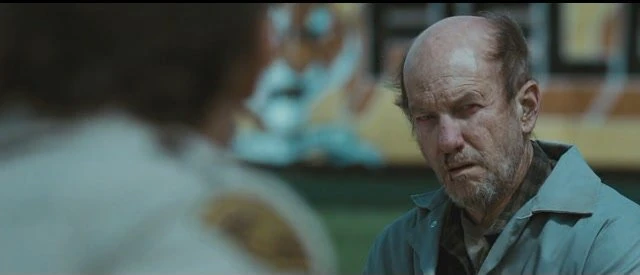
Rory Hammill

The virus continues to spread and the chaos with it, the balance between normality and chaos shifts immediately. There is no full resolution or new equilibrium in the film. A containment protocol that destroyed Ogden Marsh commences on the town that the two main characters (a couple) approach. This is conventional of horror films but also means Todorov’s theory does not apply. After the credits a  news report plays showing that it is far from over:
After the credits

There are many instances of binary opposition in The Crazies. Binary opposition are sets of opposite values which reveal the structure of media texts (e.g. GOOD and EVIL), this theory was first coined by French anthropologist Claude Levis Strauss. One instance is sanity and insanity, the same characters (the survivors) try to survive and fend off the infected insane characters. Healthy and unhealthy is another case of binary opposition in the film.
Healthy vs unhealthy

The health of normal people deteriorates as they cannot eat properly and the insane infected people are obviously unhealthy. Day and night also applies, night implies danger as there is limited sight and shadows and day can be equally as dangerous but with better vision and confidence in the characters, light and dark is the same concept. Alive and dead applies too, People are killed by the insane and people who are not infected are alive, David is the male and Judi is the female. They are in a relationship and Judi is pregnant. The male has more power and the female is targeted more.

We see Judy's true character when she fights back; in this case, hiding in the truck and shooting a Crazy.
The masks give the military no identity, dehumanising them. It could also be said that they reflect the fear of government control and its power


Russell (left) acts as the Deputy to David (right) as the Sheriff, but also wants to help them all escape from Ogden Marsh.
Russian critic Vladimir Propp further broke down the Classical Hollywood Narrative, he figured out characters that kept reappearing in stories: the protagonist (hero), the antagonist (villain), helper, dispatcher, false hero among others. In The Crazies the villain is the US army, they crashed a military aircraft containing a dangerous chemical into the town’s water, they are the reason the virus is in the community. Main character David (the town Sheriff) is the hero, he saves his, wife and several other people and escape from the quarantine, and survives. Rory counts as the dispatcher because he is the first townsperson to become infected by the virus, and the mayor is the false hero as he refuses to turn off the water for the town and by doing so he allows the virus to spread through the rest of the town, although he was thinking of the town’s wellbeing as he knew that they would need crops. Carol Clover’s final girl theory applies as Judi survives. Although The Crazies doesn’t use final girl theory in the sense that characters that have sex, drink alcohol and do drugs die, Judi doesn’t have sex, drink alcohol or do drugs and ultimately survives.

The Crazies both supports and challenges theories in relation to character and narratives. The Crazies challenges the Classical Hollywood Narrative in the sense that there is no equilibrium from the off and no requilibrium at the end of the film, however it does support character types, binary opposition and final girl theory.  It is typical that horror films start with a disrupted equilibrium and end with a not so happy equilibrium leaving room for potential sequels, in this case the containment protocol in the town that David and Judi are approaching gives the impression that more chaos is going to happen and leaves the film open to a sequel or sequels.